

For over 20 years, I've worked with Fortune 500 companies and startups to help them build better customer engagement, acquisition and retention strategies. Every issue of Backstage Pass pulls back the curtain and shares what I've learned, and teaches you how to apply these same concepts to grow your own Substack into a sustainable business.
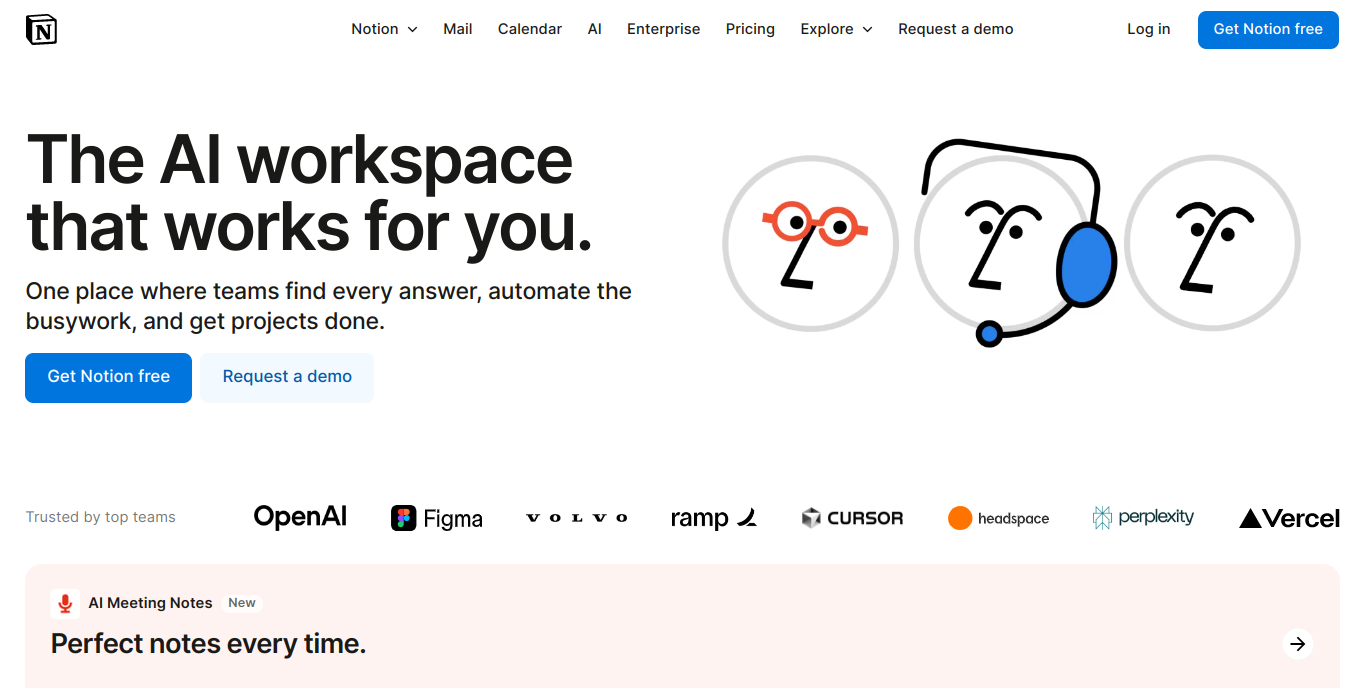
This issue of Backstage Pass will feature a deep dive into how Notion has leveraged smart community marketing in order to build a startup that’s now worth 11 figures. There will be a ton of actionable insights and takeaways from Notion’s marketing and user engagement strategy. Here’s some of the areas we will cover:
How (and why) Notion engages with its users
Why Notion is so heavily invested in influencer marketing
The one KPI that Notion tracks to measure if its influencer marketing is working
The formula that companies can use to decide if they should invest in community marketing
The secret strategy to focus on if you want to reach B2B customers (this one seems completely counterintuitive, until you see how it works for Notion)
How Notion structures its ambassador program, its growth strategy, and how ambassadors are compensated
Notion’s content marketing strategy. Hint: It’s not about Notion, its about the user.
The company that would become Notion was launched in 2013 by co-founders Ivan Zhao and Simon Last. It spent 3 years in development, and initially struggled to gain traction. So much so that by 2016, the startup was on the verge of bankruptcy.
Today, Notion boasts over 100 Million users, and half of the Fortune 500 companies use Notion every day. Its most recent funding round in 2024 valued the company’s worth as $10 Billion.
What changed to take Notion from near bankruptcy to being worth $10 Billion, in less than a decade? Let’s dive in.
What is Notion?
Notion is an all-in-one productivity and collaboration platform that combines note-taking, project management, and organization tools into a single, customizable workspace. Launched in 2016 by Notion Labs, Inc., it’s designed to simplify workflows for individuals, teams, and businesses by replacing multiple apps like Evernote, Trello, or Google Docs with one flexible tool. Think of it as a digital Swiss Army knife for organizing your life or work.
At its core, Notion uses a block-based system, where users create pages made up of “blocks” (text, images, tables, checklists, databases, or embeds like videos). These blocks can be rearranged to build anything from a simple to-do list to a complex project tracker or team wiki. For example, you could create a personal journal, a company handbook, or a Kanban board for task management, all within the same platform. Its drag-and-drop interface and clean, minimalist design make it intuitive, while its flexibility lets users tailor it to their needs.
It’s cloud-based, accessible on web, desktop, and mobile (iOS, Android), with offline capabilities. Notion’s freemium model offers a free tier for individuals, with paid plans (Personal Pro, Team, Enterprise) for advanced features like unlimited storage, version history, or enterprise-grade security. By 2025, Notion boasts over 100 million users, including 50% of Fortune 500 companies, with clients like Pixar and Uber.
In short, Notion has been a massive success and is the darling of the startup world. And while the company currently has around 500 employees, as recently as late 2018, it still only had 10 employees.
But it was Employee #11, hired in late 2018, and Employee #15, hired in early 2019, who put the wheels in motion to transform Notion from a struggling startup, to a $10 Billion unicorn. All by relying heavily on smart community marketing.
Here’s how they did it…